Running a business today means depending on technology for almost everything. From communication and file sharing to customer management, online services and everyday operations businesses need their IT Support Services to work properly. When technology stops working even a small issue can slow down work. Affect customers.
This is where IT support can make a difference. IT support helps businesses manage their technology, solve problems and keep their systems running smoothly. By waiting for a major issue to happen businesses can use ongoing support to identify problems, maintain systems and reduce unnecessary disruption.
Whether you run a business or manage a growing organisation, having the right IT support can make everyday work easier. A suitable approach can help your team use technology with confidence while allowing you to focus on running your business.
IT Support Services are services that help businesses manage, maintain and troubleshoot their technology. This can include computers, networks, software, email systems, cloud platforms, security tools and other IT equipment used by a business.
When a technical issue occurs IT support can help identify the problem. Find a suitable solution. Support can also involve maintenance, system monitoring, software updates and guidance for employees.
IT support is not about fixing computers when something goes wrong. It can also help businesses prevent technical problems and maintain a more reliable IT environment.
For example if an employee cannot access their business email an IT support team can investigate the issue. If a company needs help setting up devices, managing user accounts or improving its network IT support can also assist with these tasks.
The exact ITservices provided will depend on the size of the business, its technology and its specific requirements.
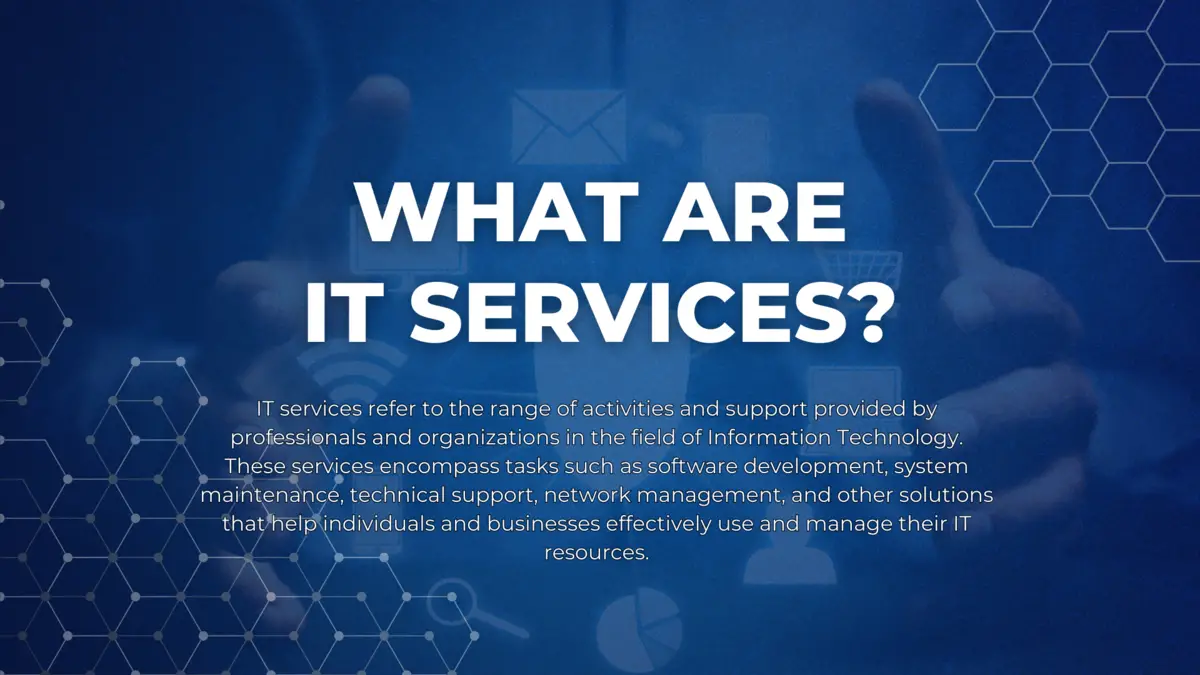
Technology has become a part of everyday business operations. Even businesses with a team may rely on computers, internet connections, cloud applications, email and online systems.
When these tools work properly employees can complete their work without interruptions. However technical problems can quickly affect productivity.
For example a network problem could prevent employees from accessing files. A software issue could delay a project while an email problem could make it difficult to communicate with customers.
IT support can help businesses deal with these situations and keep their technology working as expected.
Some of the reasons businesses use IT support include:
IT support can cover a range of tasks. The services a business needs will depend on its systems, team size and day-to-day operations.
A typical IT support service may include help, network support, device management, software assistance, cloud support and security guidance.
Technical support helps employees deal with technology problems.
This may include issues with computers, printers, software, email accounts, internet connections and other business technology.
Quick support can help employees return to work without spending time trying to solve technical problems themselves.
A reliable network is important for businesses that need employees to access shared resources, online applications and internal systems.
Network support can involve setting up, maintaining and troubleshooting business networks.
This may include checking network performance, resolving connection problems and helping businesses maintain access.
Businesses often use computers, laptops, mobile devices and other equipment.
Managing these devices can become more difficult as a company grows. IT support can help with device setup, configuration, updates and troubleshooting.
A structured approach to device management can also make it easier to introduce equipment when employees join the business.
Business software needs to work for employees to complete their tasks.
IT support can help with software installation, configuration, updates and common technical issues.
Support may also help businesses understand whether existing software is still suitable for their needs.
Many businesses now use cloud-based services, for storage, communication, collaboration and other everyday tasks.
Cloud support can help businesses manage accounts, access, permissions and common technical issues.
It can also help employees make use of cloud platforms while reducing unnecessary disruption.
Security is a part of managing business technology.
IT support can help businesses improve security practices, manage access and keep systems updated.
Businesses may also receive guidance on passwords, user permissions, software updates, backups and security awareness.
Having IT support can give a business several practical benefits.
Technical problems can stop employees from completing their work.
IT support can help. Resolve problems so that businesses can reduce unnecessary downtime and get systems working again.
Employees can spend time dealing with technical problems when IT support is available.
By trying to troubleshoot an issue themselves they can receive guidance and return their attention to their main responsibilities.
As a business grows its technology can become more difficult to manage.
IT support can help businesses keep track of devices, software, user accounts and other systems.
Keeping systems updated and managing access properly can support security.
IT support can help businesses understand risks and introduce practical measures to protect their systems and information.
Technology needs can change as a business grows.
New employees may need devices and accounts while growing teams may require systems or additional software.
IT support can help businesses manage these changes and make technology decisions based on their requirements.
businesses may not have a dedicated internal IT team. This can make it difficult to deal with problems, maintain systems and plan future technology needs.
External IT support can provide access to knowledge without requiring a large internal team.
For a business support might include setting up computers, managing email accounts, troubleshooting network issues and helping employees with software.
As the business grows its technology requirements may also change. Having an IT support approach in place can make it easier to manage these changes.
Small businesses can also use support to identify technology issues before they become problems.

Some businesses choose managed IT support than only contacting an IT provider when something goes wrong.
Managed support usually involves monitoring, maintenance and technical assistance.
This approach can help businesses keep their systems maintained by relying entirely on reactive support.
Depending on the provider and business requirements managed support may include:
The exact service will vary between providers so businesses should check what is included before choosing a support package.
Businesses across the UK have technology requirements depending on their industry, location and size.
A small business in Birmingham may have needs from a growing company operating across London or several UK locations.
IT Support Services UK can cover a range of business requirements from everyday technical support to network management and ongoing system maintenance.
For businesses with hybrid teams reliable IT support can also help employees access the systems and tools they need to work effectively.
The suitable approach should be based on the actual needs of the business rather than simply choosing a standard package.
IT support can be provided remotely on-site or through a combination of both.
Remote support allows technicians to investigate and resolve many issues without visiting the business premises.
This can be useful for software problems, account issues, configuration tasks and other technical problems that can be handled remotely.
It can also be convenient for businesses with employees or multiple locations.
Some problems require someone to visit the business directly.
On-site support may be useful for hardware problems, network equipment, device installations or other issues that cannot be resolved remotely.
A combination of on-site support can give businesses more flexibility.
Choosing IT support is a decision because technology is closely connected to everyday business operations.
Before choosing a provider businesses should consider their systems, number of employees, locations and future requirements.
It is also useful to understand what type of support is available and how technical issues will be handled.
Start by identifying the technology your business relies on.
Consider your computers, network, software, cloud services, email systems and other important tools.
Understanding these requirements can make it easier to identify the type of support your business needs.
I often check the services that a provider offers. Different providers offer services. Some may focus on helpdesk support while others provide services such as network management, cloud support, security and ongoing maintenance. Make sure the provider can support the systems your business uses.
When a serious technical problem happens, response time can matter. I ask how support requests are handled and what response times are available for types of issues. Clear expectations can help avoid confusion when support is needed.
Your IT requirements may change as your business grows. I want a provider that can support changes such as employees, additional devices, new software and different working arrangements.
Good communication can make ITsupport easier to manage. I appreciate when a provider explains issues in a way that business users can understand and provides clear information about the work being carried out.
There is no IT setup that works for every business. The Best IT Services for one company may not be the same for another. A small company may mainly need support and device management while a larger organisation may require network management, cloud services and security support. Businesses should therefore look at their requirements before choosing an IT provider. The focus should be on finding services that solve business problems and support everyday operations.
When looking for a provider I compare agencies based on their services, experience and approach. A Best IT Agency should understand the technology requirements of the businesses it supports and provide information about its services. I look at the provider expertise, communication, support process and ability to work with your existing systems. Businesses should also avoid choosing a provider based on promises or pricing. The right support should provide value and fit the business’s actual requirements.
Businesses looking for a Best IT Agency UK may come across providers offering types of technology support. Before making a decision I consider whether the provider understands the needs of UK businesses, the systems you use and the way your team works. It can also be useful to ask about support availability, response times, security practices and how the provider handles technology requirements. A good working relationship is important because IT support can become a part of business operations.
Businesses can experience different technology problems during everyday operations. Some issues are small while others can have an impact.
Slow devices can affect employee productivity. Make simple tasks take longer. Regular maintenance and checking system performance can help identify causes.
Unstable internet or network connections can interrupt communication and access to services. IT support can investigate connection issues. Help maintain a reliable business network.
Email is still a communication tool for many businesses. Problems with account access, configuration or delivery can affect communication with customers and colleagues.
Applications may stop working, become outdated or conflict with other software. Technical support can help identify the problem. Find a suitable solution.
Computers, printers and other equipment can develop faults over time. IT support can help troubleshoot hardware issues. Advise businesses when replacement equipment may be needed.
IT support and cyber security are closely connected. Businesses use technology to store and manage information, which means protecting systems and accounts is important. Basic security practices can include keeping software updated using passwords, managing user permissions and maintaining reliable backups. Employees should also understand risks such as suspicious emails, unsafe links and attempts to obtain login information. IT support can help businesses introduce security measures and maintain systems more effectively. However businesses should consider their security requirements carefully particularly when handling customer or financial information.
Cloud technology has changed how many businesses work. Employees can use cloud platforms to access files, communicate with colleagues and collaborate on projects from locations. However cloud systems still need to be managed. Businesses may need support, with user accounts, permissions, configuration, integrations and technical problems. IT support can help businesses make use of cloud technology while keeping access organised.
Remote and hybrid working have made reliable technology more vital for many businesses.
Employees require access to email, files, communication platforms and business applications no matter where they work.
IT support can help businesses set up devices, manage user accounts and troubleshoot access problems.
IT support can also help employees understand how to use business systems when working outside the office.
A clear IT support process can make remote working easier to manage and reduce disruption when employees experience problems.
The cost of IT support can vary depending on the services a business requires.
Factors such as the number of users, devices, locations, software, support hours and level of service can all affect pricing.
Some businesses may pay for IT support based on usage while others may choose a fixed package.
Before agreeing to a service businesses should understand what is included, whether there are charges and how IT support requests are handled.
The cheapest option is not necessarily the best. Businesses should consider the level of IT support they actually need and the impact of technology problems on their operations.
Choosing an IT provider is one part of the process. Businesses can also take steps to make IT support more effective.
Keep an up-to-date list of devices and software used by the business. Make sure employees know how to report issues and understand basic security practices.
It can also help to review IT requirements
As your business grows technology needs may change. Regular reviews can help identify areas where systems could be improved or where additional IT support may be useful.
IT support services can include support, network management, device management, software support, cloud assistance, security guidance and ongoing maintenance.
The exact services depend on the needs of the business and the systems it uses.
Yes. Small businesses can use IT support to manage problems, maintain systems and help employees use technology effectively.
External IT support can also provide knowledge without requiring a large internal IT team.
Managed IT support is an approach to technology management. It can include monitoring, maintenance, technical assistance, updates and other regular IT tasks.
The exact services depend on the provider and the business requirements.
Yes. IT support can help businesses set up devices manage user accounts, troubleshoot access problems and support employees working
Look at the providers services, experience, response times, communication and ability to support your current and future requirements.
It is also important to understand what is included in the IT support package before making a decision.
Every business should consider how it protects its systems and information. The level of IT support required will depend on the technology used, type of information handled and potential risks.
IT support can help businesses introduce security measures and maintain systems.
Technology plays a role in modern business and technical problems can affect productivity, communication and customer service.
IT support services can help businesses manage their technology, resolve problems and maintain reliable systems.
From support and network management, to cloud assistance, device management and security guidance the right IT support can make everyday technology easier to manage.
Businesses should choose IT support based on their requirements, future plans and the systems they rely on.
TheCoreClick can help businesses build an approach to IT support that fits their technology needs and supports their wider business goals.